Hey everyone, Master Ravi here. Welcome. So today we’re talking about slow flow yoga.
Basically, it’s exactly what it sounds like — we move slow. No rushing. The poses flow into each other, but everything is smooth and unhurried. You hold each shape a bit longer than in those fast-paced classes. And that’s actually the whole point.
When you slow down like this, you get to actually feel what’s happening. Your breath, your alignment, how your body really feels in a pose. It becomes kind of meditative. Calming.
And the best part? It’s really beginner-friendly. You don’t need to know fancy transitions or keep up with anyone. But even if you’ve been practicing for years, slow flow will challenge you — just in a quieter way.
So yeah. Take your time. Breathe. Let’s get started.”
Deep breathing – Slow Flow Yoga
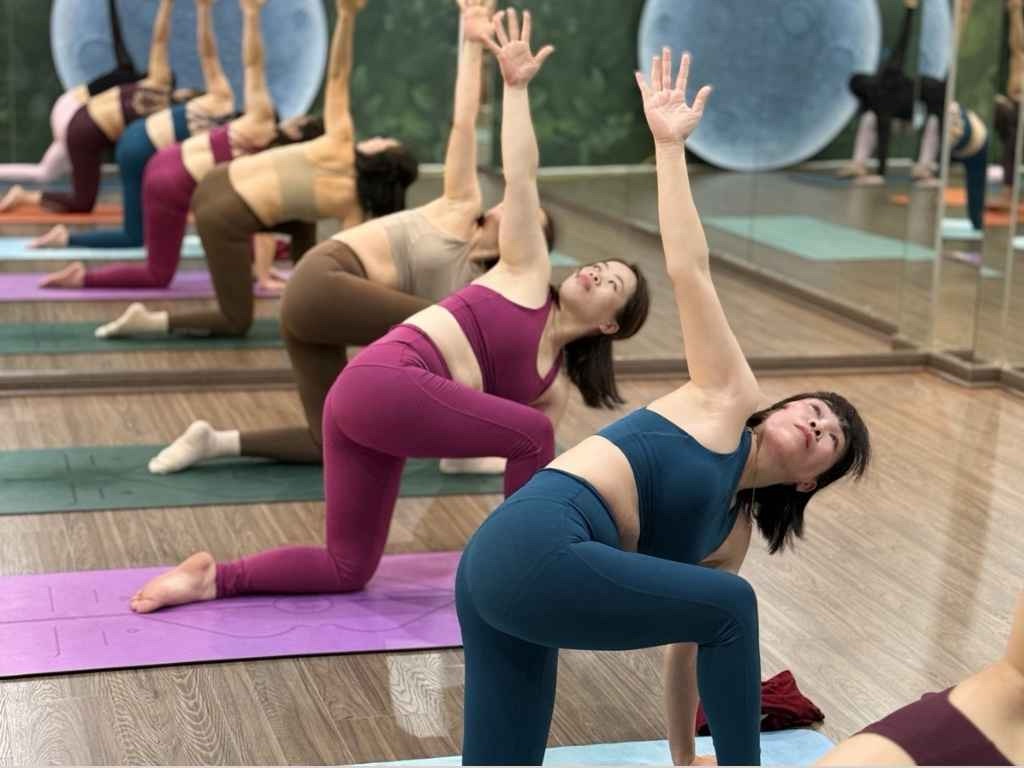
Before we start moving, just find a comfortable seat. Sit up tall, nice and easy, and gently close your eyes.
For the next two minutes or so, just let go of whatever’s going on outside. Turn your attention inward. Don’t try to change your breath — just notice it. Feel how it naturally moves in and out.
Then, very gently, start to lengthen your inhales through your nose. Feel your belly and chest rise. And as you exhale, make it slow and easy. Let your shoulders soften. Let your jaw relax.
That’s it. This simple breathing becomes the bridge between your busy mind and your body. It settles your energy and creates a little pocket of stillness — something you can carry into every movement on your mat.
Cat caw stretches with Slow Flow Yoga
Come onto your hands and knees in a tabletop position. Stack your wrists right under your shoulders, and your knees under your hips. Spread your fingers wide, press the tops of your feet into the mat, and just find a flat, neutral spine to begin.
Now let your breath lead the movement.
On your inhale, move into Cow: drop your belly down, let your tailbone lift toward the sky, and open your chest forward. Lift your gaze just a little — but don’t crank your neck. Keep it long and comfortable.
On your exhale, move into Cat: press into your hands and feet, round your spine up toward the ceiling like a cat stretching. Tuck your tailbone under, pull your belly in, and let your head drop gently. Look back toward your thighs.
Just flow between these two shapes: inhale, Cow — exhale, Cat. Do this for 5 to 10 breaths, at your own pace. It feels good on your spine, wakes up your body, and helps you settle into that mind-body connection before moving into deeper poses.
Slow Downward Dog
After you finish your last Cat-Cow, just come back to a neutral tabletop position — hands under shoulders, knees under hips.
On your next inhale, walk your hands forward an inch or two. Spread your fingers wide and press firmly through your index finger and thumb. That protects your wrists.
Tuck your toes under. Take a breath in. Then as you exhale, engage your core and slowly lift your knees off the mat.
Don’t rush it. Just feel your hips rising up toward the ceiling. Keep your knees bent at first — that’s fine. Focus on a long, straight spine rather than forcing your legs straight. Let your head hang between your arms, ears in line with your upper arms.
Once your hips are high, you can gently pedal your feet — lowering one heel, then the other — to stretch your calves and hamstrings.
Take your time with this transition. It’s not just a pose you fall into. It’s a slow, mindful exploration of length and stability. And when you settle into your Downward Dog, just breathe and be still for a moment.
Half Lift → Step back to Low Lunge
From your Downward Dog, look toward your hands and start walking your feet forward — small, easy steps — until they come to the top of the mat, feet about hip-width apart.
On an inhale, lift your chest into a Half Lift. You can keep your fingertips on the mat or rest them on your shins. Just pull your chest forward and flatten your back, so your body feels long from your tailbone to the top of your head.
Then exhale, soften your knees, and plant your hands firmly on the mat next to your feet.
Now, keep your core engaged. Take a slow, controlled step back with your right foot. Land softly on the ball of your foot, then gently lower your back knee to the mat. That’s your Low Lunge.
Make sure your front knee is stacked right over your ankle — about a 90-degree angle. Let your hips sink forward and down. Feel the stretch in your hip flexors and psoas.
This move takes you from stretching the backs of your legs in the Half Lift to opening the front of your hips. It builds a nice, grounded foundation — readying your body for the standing warrior poses coming up.
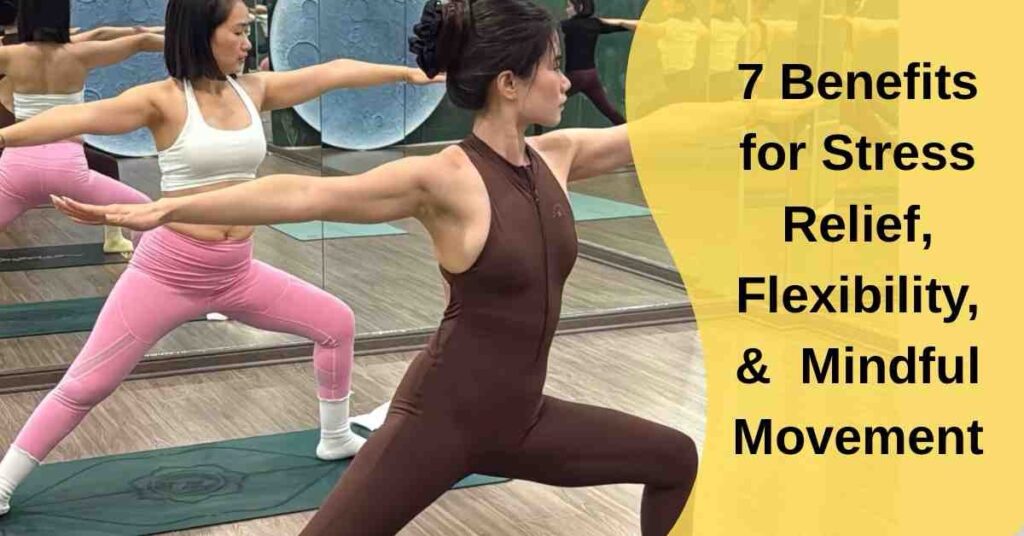
Gentle Warrior I → Warrior II
From your Low Lunge, get ready to move into Warrior I.
First, tuck your back toes under, lift that back knee, and then press your back heel down at a slight angle — about 45 degrees. Make sure that foot feels stable and rooted.
On an inhale, engage your core and slowly lift your torso up. Reach your arms overhead, palms facing each other. Keep that front knee bent deeply over your ankle.
Try to square your hips toward the front of the mat. Lengthen through the sides of your waist. Feel the energy from your back heel all the way up through your fingertips.
Now to come into Warrior II:
On a long exhale, start to open your hips and chest toward the side of the room. As you turn, open your arms out into a T shape — strong but relaxed through the shoulders. Keep your shoulders stacked right over your hips.
Let your gaze (your drishti) float forward over your front middle finger. Adjust your back foot slightly so it’s parallel to the back edge of your mat.
That’s it. Warrior I is more forward-facing and internal. Warrior II opens you up — wider, more expansive. Both build heat in your legs, but they also calm your mind and sharpen your focus.
Seated forward fold with Slow Flow Yoga
Now from Warrior II, let’s come down to a seated forward fold.
First, straighten your front leg and turn both feet to face the side of your mat. Bring your hands to your hips.
On a long exhale, hinge at your hips and fold forward into a wide-legged stretch. Plant your hands on the floor to help support you, then gently lower your knees to the mat.
From here, either cross your ankles behind you and roll over your feet, or just swing your legs around so they’re straight out in front of you.
Sit up tall on your sit-bones. Reach the top of your head toward the ceiling. Keep your spine long and neutral.
Take a deep breath in, and reach your arms overhead. Stretch your whole torso.
As you exhale, fold forward from your hip joints — don’t just round your lower back. Reach your hands toward your shins, ankles, or the outside of your feet. If your hamstrings feel tight, keep a soft bend in your knees. What matters most is feeling your lower belly touch your thighs.
With each inhale, imagine your spine growing a little longer. With each exhale, let your chest melt a little closer to your knees.
This pose is a big shift — from the active, fiery warriors to a quiet, inward fold. It stretches your whole back body and gently prepares your nervous system for the final relaxation.
Final relaxation (Savasana)
Now let’s slowly bring your practice to a close.
From your Seated Forward Fold, gently release your feet and start to roll your spine down onto the mat — one vertebra at a time — until your whole back is resting on the floor.
Extend your legs long and let your feet flop open naturally to the sides. Rest your arms a few inches away from your body, palms facing up, like you’re ready to receive.
Tuck your shoulder blades slightly underneath your chest to open your heart a little. Let the back of your neck feel long. Then just let your whole body become heavy — heavy and soft, melting into the mat.
In this pose, you don’t have to do anything anymore. No more effort. No more controlling your breath. Just let your body absorb all the good work you’ve done.
Take a moment to scan for any leftover tension — in your jaw, your forehead, your fingertips. And on each exhale, just let it go. Let it melt into the floor.
Savasana isn’t just lying down. It’s deep rest for your nervous system. Your mind stays quiet but awake — just watching, just feeling the peace you’ve created.
Stay here for a few minutes. Let the line between you and the mat disappear. Enjoy the silence. Enjoy the clarity.
Benefits of Slow flow yoga
1. Improves flexibility and balance
This flow gently works your whole body. Cat-Cow frees up your spine. Downward Dog and the forward fold stretch the backs of your legs — hamstrings and calves. And when you move from Half Lift into Low Lunge, you start testing your balance. Warrior I and Warrior II take it further. Holding those standing poses wakes up all those little stabilizing muscles around your ankles and hips. Your body learns where its center is, even as you shift and move.
2. Builds light strength without strain
This isn’t about pushing hard or jumping around. It’s about what we call “functional strength” — strength you actually use. Holding Warrior I and Warrior II builds heat and endurance in your thighs and glutes, but without any impact. Moving from Downward Dog to a forward fold asks your core and shoulders to work. Because you’re moving slow, you’re not using momentum to cheat. Your muscles do the work safely, and you actually feel it.
3. Reduces stress and anxiety
We bookend the whole practice with deep breathing at the start and Savasana at the end. That deep belly breathing tells your nervous system to calm down — lowers stress hormones, slows your heart. And the rhythm of moving slowly from pose to pose? That’s a moving meditation. It shuts up the chatter in your head. By the time you reach final relaxation, your body has let go of tension, so your mind can finally settle into a real sense of calm.
4. Helps you connect mentally and physically
Because we move so slow, you have to pay attention — really feel where your body is in space. That’s called proprioception. When you go from Half Lift to Low Lunge, you notice exactly where your foot is, how your knee is lined up. That creates a conversation between your brain and your body. And when every movement is tied to your breath — inhale, exhale — you stop thinking about yesterday or tomorrow. You’re just here, right now. That’s the good stuff.