
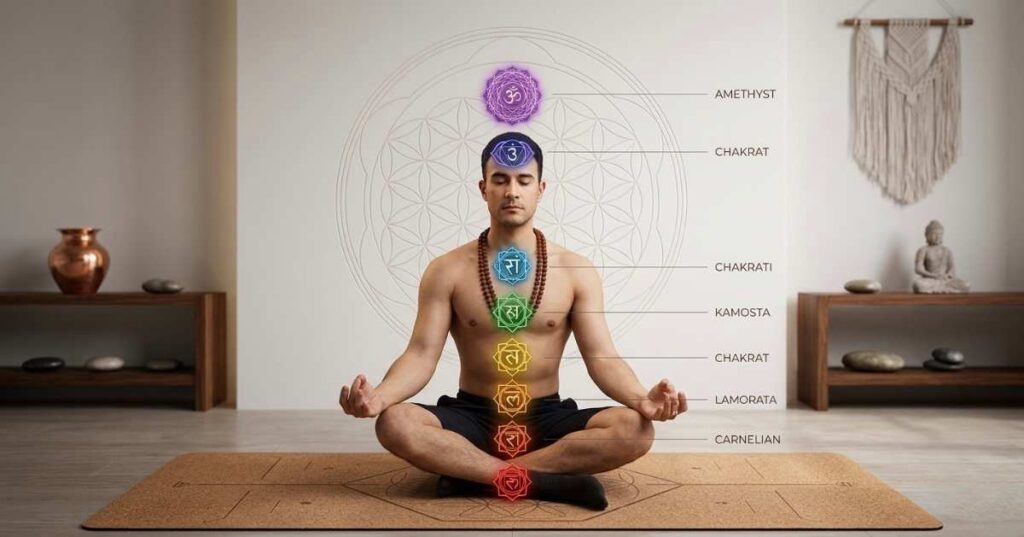
Namaste, hello dear yoga practitioner. Master Ravi here. Today we’re going to explore something really special—yoga asanas for your chakras. You see, chakras are like energy centers running from the base of your spine to the top of your head. Each one connects to different parts of your body and different parts of your life. For Root Chakra, you focus on legs and feet—feeling stable like a mountain. Sacral Chakra lives in your hips and pelvis, where creativity and emotions like to hide. Solar Plexus is your core, your power center—boat pose will wake that fire right up. Heart Chakra opens through your chest and upper back—camel pose is scary but beautiful. Throat Chakra asks you to pay attention to your neck and throat—keep that breath smooth, no forcing. Third Eye is all about inner awareness, so close your eyes and turn inward. And Crown Chakra? That’s pure stillness—meditation, savasana, no effort, just being. The most important thing I tell my students: don’t chase the perfect pose. Just breathe, focus on the body part I mentioned, and let the energy move. Start where you are. Even five minutes is enough. Now take a deep breath with me… and let’s begin.
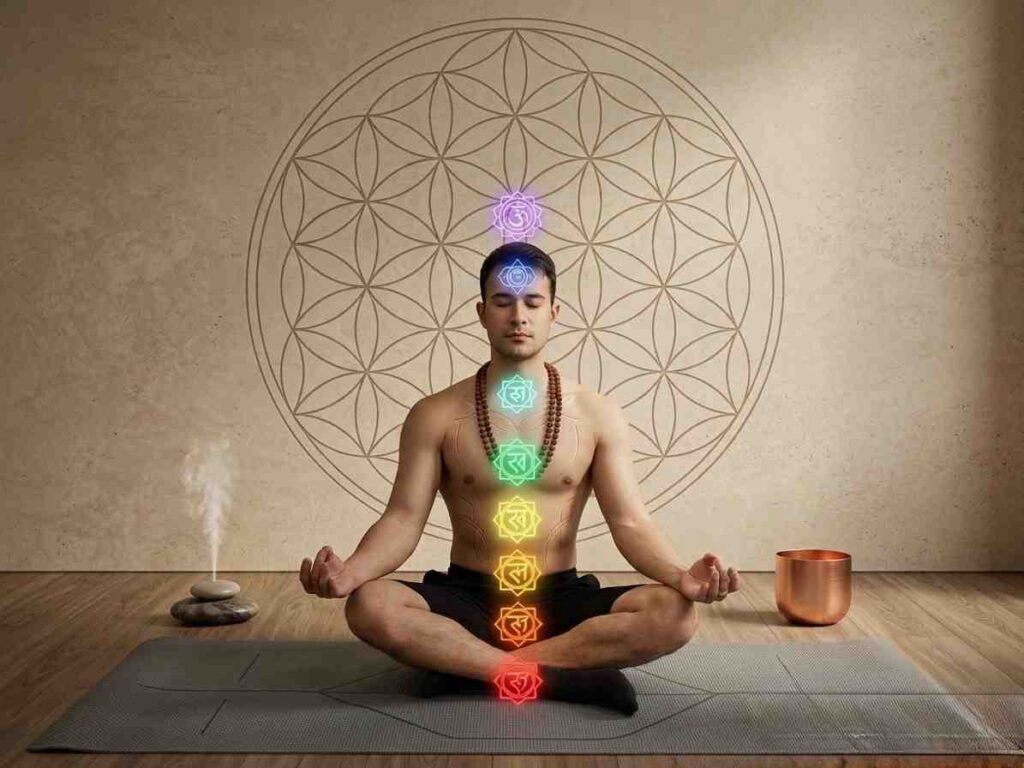
1. Root Chakra Balancing (Muladhara) – Stability & Grounding
Focus: legs, feet, connection to earth
• Mountain Pose (Tadasana)
• Warrior I (Virabhadrasana I)
• Malasana (Garland Pose)
Tip: Practice barefoot and slow your breathing.
When you’re feeling all over the place or super anxious, it usually just means your energy’s floating too high up. You gotta bring it back down—and that’s where the Root Chakra comes in. Basically, you’re plugging yourself back into the wall. Try standing in Mountain Pose or sinking into a deep squat (Malasana). It forces you to actually feel the ground under you. And it’s not just a stretch—it’s telling your nervous system, “Hey, you’re safe. You’re okay.” Once you press your feet into the floor and slow your breath down, all that mental chatter starts to fade. What’s left is this solid feeling of belonging, of being right here in your body. Think of it like building a foundation. Without it, your whole house is gonna fall apart.
2. Sacral Chakra (Svadhisthana) – Creativity & Emotions
Focus: hips, pelvis
• Bound Angle Pose (Baddha Konasana)
• Goddess Pose (Utkata Konasana)
• Low Lunge (Anjaneyasana)
Tip: Add gentle hip circles to release tension.
So the Sacral Chakra Balancing? That’s where your creativity and emotions live, but it’s also where we tend to shove all our stress and old crap we’re holding onto. Ever notice how when your hips feel super tight or locked up, it’s usually because you feel stuck in life? That’s not random. So when you get into a Low Lunge or hold Goddess Pose, you’re literally making space for your emotions to just breathe. And yeah, it might feel a little intense at first—hips are famous for hanging onto stuff we’d rather forget. But throw in some gentle hip circles, and you start breaking up that stuck energy. Really, it’s about moving away from being so stiff and letting yourself be more fluid, more playful. That’s how your natural spark and passion finally come back to the surface.
3. Solar Plexus Chakra (Manipura) – Power & Confidence
Focus: core, digestion
• Boat Pose (Navasana)
• Plank Pose
• Bow Pose (Dhanurasana)
Tip: Engage your core and hold with steady breath.
So the Solar Plexus? Basically your internal engine. It’s where your willpower lives, your self-esteem, and that gut instinct everyone’s always talking about. When you fire up your core in Boat Pose or hold a steady Plank, you’re not just building muscle—you’re stoking your inner fire. And that controlled heat? It’s what turns hesitation into actual confidence. Look, it’s easy to hold your breath when things get hard. But the real magic happens when you keep a steady rhythm going while your muscles are screaming. Engaging that center is your way of reminding yourself: “I’ve got the power to take up space and handle whatever life throws at me.” Honestly, it’s the difference between feeling like a passenger in your own life and actually sitting in the driver’s seat.
4. Heart Chakra (Anahata) – Love & Compassion
Focus: chest, upper back
• Camel Pose (Ustrasana)
• Cobra Pose (Bhujangasana)
• Bridge Pose (Setu Bandhasana)
Tip: Open your chest and breathe deeply.
The Heart Chakra Balancing is this bridge between your physical self and your spiritual self—it’s where you give and receive love. But let’s be real: most of us spend our days hunched over phones, laptops, or steering wheels. That literally closes off your chest, and without even noticing, you end up closing off your heart too. That’s why backbends like Camel Pose or Bridge Pose are so powerful—they reverse that whole “shielding” posture. And yeah, it can feel surprisingly vulnerable to open up your chest like that. But that vulnerability? That’s actually where the growth happens. When you lift your heart toward the ceiling and breathe into all those tight spots in your upper back, you’re clearing out old resentment and making space for genuine compassion—for other people, sure, but most importantly for yourself. It’s a physical reminder that choosing to stay open isn’t weakness. It’s strength.
5. Throat Chakra (Vishuddha) – Communication
Focus: throat, neck
• Fish Pose (Matsyasana)
• Shoulder Stand (Sarvangasana)
• Plow Pose (Halasana)
Tip: Keep your breath smooth and relaxed.
The Throat Chakra Balancing is where self-expression and speaking your truth live. When this area gets blocked, you’ll probably notice yourself swallowing your words or feeling like nobody’s really listening. Poses like Fish Pose or Plow Pose work because they physically stimulate your neck and thyroid area, which helps clear out that awful “lump in the throat” feeling you get when you’ve been holding stuff in. It’s this tricky balance between opening and compressing—so keeping your breath smooth and relaxed is huge. It teaches you to stay calm and think clearly even when you’re in a position that feels tight or restrictive. Focusing on this space is basically like tuning your instrument. You’re making sure that when you finally do speak, your voice actually sounds like you—authentic, clear, and true to who you are.
6. Third Eye Chakra (Ajna) – Intuition
Focus: mind, inner awareness
• Child’s Pose (Balasana)
• Forward Fold (Uttanasana)
• Dolphin Pose
Tip: Close your eyes and focus inward.
The Third Eye Chakra Balancing is like your internal compass—it’s where logic fades out and intuition takes over. In everyday life, we’re constantly bombarded with stuff to look at and distractions everywhere, so it’s really easy to lose touch with your own inner guidance. That’s why settling into Child’s Pose and resting your forehead on the mat—or letting your head hang heavy in a Forward Fold—works so well. You’re literally turning your gaze away from the outside world. And that shift? It helps the mental chatter settle down, moving you from overthinking to just sensing. When you close your eyes and focus on that spot between your brows, you start tapping into a deeper kind of clarity. It’s about trusting how you feel instead of only trusting what you see. And that helps you navigate life with this calm, quiet certainty that just feels right.
7. Crown Chakra (Sahasrara) – Awareness & Connection
Focus: stillness, meditation
• Headstand (Sirsasana) (advanced)
• Lotus Pose (Padmasana)
• Savasana (Final Relaxation)
Tip: Practice meditation and stillness here.
The Crown Chakra Balancing is kind of the peak of all this—where you move beyond your physical body and tap into that sense of universal consciousness. But here’s the thing: it’s less about doing and way more about just being. Yeah, a Headstand can physically draw energy up toward your crown, but the real work? It usually happens in the deep stillness of Lotus Pose or Savasana. In those quiet moments, the goal is to let go of your ego and that endless mental to-do list. When you commit to pure stillness and just sit with yourself, you start to realize that you’re not just some isolated person trying to figure it all out alone—you’re actually part of something way bigger. And that’s the ultimate mental clarity. It’s that sense of peace you get when you finally stop hunting for answers and just allow yourself to be present in the silence.
Namaste, everyone.
As we start to wind down, just lower your gaze. Bring your practice to a gentle close. And remember—those seven chakras? They’re not some fancy concept out there. They’re literally a map of you. The real you.
Think about what we just did. Yeah, we stretched our muscles. But it was more than that. With each pose, you were clearing out the junk—making space for your energy to actually move again. You built a strong base at the root. You woke up some creativity in your hips. You found power in your core. You opened your heart—really opened it. You gave yourself permission to speak your truth. You trusted what you saw, what you felt. And finally… you just let go. Into the silence. The silence that holds all of us.
Look, yoga isn’t some finish line you cross. It’s just coming back. Again and again. Back to your center. Some days you have an hour. Some days it’s five minutes on the floor. That’s fine. Your mat will be there. It’ll help you reset.
So as you step off this mat and head out into the world, carry that feeling with you. That sense of being aligned. Of being at peace.
Keep breathing. Keep being. Trust the process—even when it’s messy.
Light and peace to you all.
— Master Ravi
Online Yoga Class Daily